NATURE + HRLM Biodiversity Monitoring
 Tsuro Trust
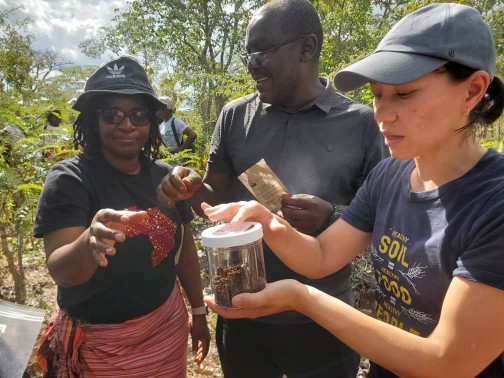
HRLM biodiversity monitoring by CFGB researcher Michelle Carkner from the University of Manitoba recently joined efforts in the Nemakonde Landscape to advance data collection for the Holistic Land and Livestock Management (HLLM) research site.
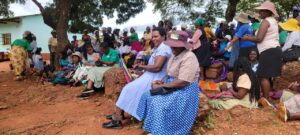
Accompanied by government officials and representatives from the Canadian Foodgrains Bank (CFGB) including Gender Advisor Caroline Lusweti, and Agricultural Livelihoods Technical Advisors John Mbae covering (East Africa) and Lilian Zheke (Southern Africa) the team engaged directly with local farmers to explore the rich heritage and evolving practices of HLLM in the region.
During their visit, the delegation helped set up experiments and ecological monitoring tools aligned with Nature+ protocols. This included bee traps for assessing pollinator diversity and pitfall traps designed to sample ground-dwelling insects—crucial components in evaluating ecosystem health and resilience.
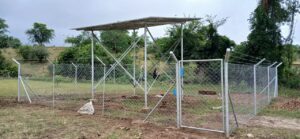
The team visited the Mukadota HLLM paddock and later met with Nature+ Lead Farmer Judith Chinawa, who demonstrated successful summer cropping techniques.
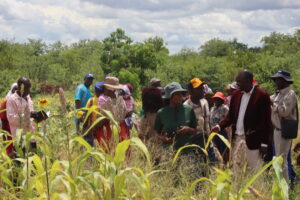
At the homestead of Fildah Gumbo, Nature+ Lead Farmer, the group observed conservation agriculture demonstration plots, soil and water conservation, water harvesting, nurseries and innovative ecological home designs.
The tour continued to the Bumba Bee Keeping initiative where farmers are making Kenyan Top bar bee hives before concluding at the farm of Eva Makwinimizi. There, the delegation appreciated her work on soil and water conservation, small grain crop diversification, and her thriving mushroom production project.
This work forms part of the Nature+ Project, implemented by TSURO Trust and funded by Global Affairs Canada through the Canadian Foodgrains Bank (CFGB), in collaboration with Alongside Hope (formerly PWRDF).
The initiative seeks to foster nature-positive food systems, enhancing local capacity for climate change adaptation while promoting sustainable land use, biodiversity, and resilient livelihoods.
TSURO Trust’s interventions are aligned with several Sustainable Development Goals (SDGs), notably those targeting poverty reduction, food and nutrition security, gender equity, access to clean water, and climate change mitigation and adaptation.
Through community-led action and knowledge sharing, the project is laying the groundwork for vibrant, self-sustaining rural landscapes in Zimbabwe.